


Web applications are everywhere—so are the attackers targeting them. Whether you’re a web developer, ethical hacker, or just getting started with cybersecurity, understanding common web vulnerabilities is essential.
Here’s a beginner-friendly breakdown of the top 10 web vulnerabilities, how they work, and how to defend against them—based on insights from the OWASP Top 10.
🔟 1. SQL Injection (SQLi)
- What it is: Injecting malicious SQL queries into input fields.
- Example:
' OR 1=1 -- - Defense: Use prepared statements (e.g., PDO in PHP, parameterized queries in Python).
- 📌 Related: Read our blog on Wazuh for log monitoring to detect SQLi attempts in logs.
- 🧪 Practice Lab: SQL Injection vulnerability in WHERE clause
9️⃣ Cross-Site Scripting (XSS)
- What it is: Injecting malicious scripts into web pages.
- Types: Stored, Reflected, DOM-based.
- Defense: Sanitize user input, use Content Security Policy (CSP).
- 🧪 Practice Lab: Reflected XSS vulnerability
8️⃣ Cross-Site Request Forgery (CSRF)
- What it is: Tricking users into performing actions they didn’t intend.
- Defense: Use CSRF tokens, SameSite cookies, and double-submit techniques.
- 🧪 Practice Lab: CSRF vulnerability with token validation
7️⃣ Insecure Direct Object Reference (IDOR)
- What it is: Accessing unauthorized data by modifying object references in URLs.
- Example:
/profile/1234 → /profile/1235 - Defense: Implement proper authorization checks on the backend.
- 📎 Learn more in our blog on Threat Intelligence for detecting access abuse.
- 🧪 Practice Lab: IDOR vulnerability
6️⃣ Security Misconfigurations
- Examples: Default credentials, open S3 buckets, verbose error messages.
- Defense: Harden configurations, run security audits using tools like Mozilla Observatory.
- 🧪 Practice Lab: Exploiting verbose error messages
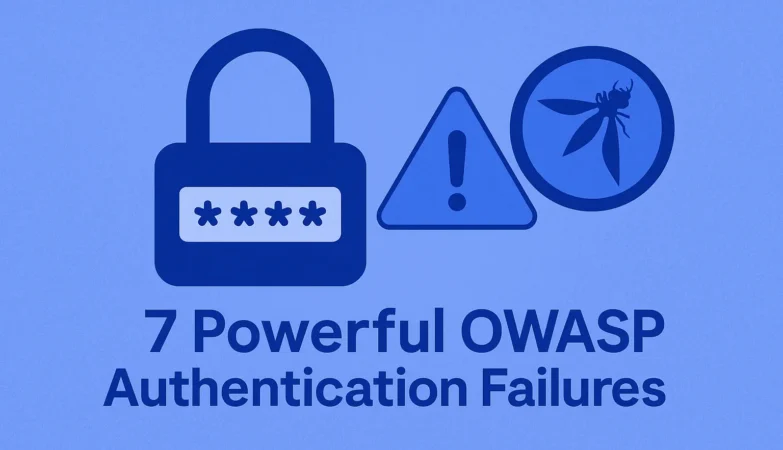
5️⃣ Broken Authentication
- What it is: Poor session management, weak password policies.
- Defense: Use multi-factor authentication (MFA), secure cookies, and session timeouts.
- 🧪 Practice Lab: Broken brute-force protection
4️⃣ Sensitive Data Exposure
- What it is: Storing passwords in plaintext, weak encryption practices.
- Defense: Always use HTTPS, and encrypt sensitive data at rest and in transit with AES or RSA.
- 🧪 Practice Lab: Exploiting misconfigured SSL
3️⃣ Broken Access Control
- What it is: Users accessing unauthorized functions or data.
- Defense: Enforce role-based access control (RBAC) and test access boundaries using Burp Suite.
- 🧪 Practice Lab: Access control vulnerability allowing horizontal privilege escalation
2️⃣ Unvalidated Redirects and Forwards
- What it is: Redirecting users to malicious sites through vulnerable URLs.
- Defense: Avoid using user input in redirect logic and whitelist URLs.
- 🧪 Practice Lab: Open redirection vulnerability
1️⃣ Using Vulnerable Components
- What it is: Outdated libraries and plugins.
- Defense: Use OWASP Dependency-Check or
npm auditto monitor and update components.
💡 Bonus Tip
New to bug bounties? Start with HackerOne’s Vulnerability Disclosure Program to practice responsible disclosure.
🔗 Internal Links Recap:
🚀 Conclusion
Understanding these vulnerabilities helps you build stronger, more secure web applications. Cybersecurity starts with awareness—so keep learning and testing your knowledge.



Been hitting lucky333 recently, and it’s been treating me pretty well. Hope my luck keeps up! Go get it: lucky333
Alright, folks, 333betcasino! Gotta say, I gave them a whirl the other day. The slots selection? Not bad at all! Pretty standard stuff, but I had some decent luck. Worth checking out if you’re looking for a new place to spin. Just remember to play responsibly! You can find them here: 333betcasino
Ssbet77legitornot? Hmm, always a good idea to double-check! Is it safe? Anyone got any stories to share before I dive in? Legit ba talaga? Find more info here: ssbet77legitornot
Alright everyone, I’ve been checking out 456win and they are giving out some wild promotions ! Might be the perfect place for a quick play !
Can you be more specific about the content of your article? After reading it, I still have some doubts. Hope you can help me.
Thanks for sharing. I read many of your blog posts, cool, your blog is very good.
Reading your article helped me a lot and I agree with you. But I still have some doubts, can you clarify for me? I’ll keep an eye out for your answers. https://accounts.binance.info/hu/register?ref=IQY5TET4
I don’t think the title of your article matches the content lol. Just kidding, mainly because I had some doubts after reading the article.
Your point of view caught my eye and was very interesting. Thanks. I have a question for you.
I don’t think the title of your article matches the content lol. Just kidding, mainly because I had some doubts after reading the article. https://accounts.binance.com/sk/register?ref=WKAGBF7Y
Thank you for your sharing. I am worried that I lack creative ideas. It is your article that makes me full of hope. Thank you. But, I have a question, can you help me?
Can you be more specific about the content of your article? After reading it, I still have some doubts. Hope you can help me. https://accounts.binance.info/es/register-person?ref=RQUR4BEO
Can you be more specific about the content of your article? After reading it, I still have some doubts. Hope you can help me.
Can you be more specific about the content of your article? After reading it, I still have some doubts. Hope you can help me.
Your point of view caught my eye and was very interesting. Thanks. I have a question for you.
Your article helped me a lot, is there any more related content? Thanks!
Can you be more specific about the content of your article? After reading it, I still have some doubts. Hope you can help me.
Thank you for your sharing. I am worried that I lack creative ideas. It is your article that makes me full of hope. Thank you. But, I have a question, can you help me?
Can you be more specific about the content of your article? After reading it, I still have some doubts. Hope you can help me.
Your article helped me a lot, is there any more related content? Thanks!
Your article helped me a lot, is there any more related content? Thanks!
Can you be more specific about the content of your article? After reading it, I still have some doubts. Hope you can help me.
Your article helped me a lot, is there any more related content? Thanks!
Thank you for your sharing. I am worried that I lack creative ideas. It is your article that makes me full of hope. Thank you. But, I have a question, can you help me?
Your article helped me a lot, is there any more related content? Thanks! binance Register
Can you be more specific about the content of your article? After reading it, I still have some doubts. Hope you can help me.
Can you be more specific about the content of your article? After reading it, I still have some doubts. Hope you can help me. https://accounts.binance.bh/register/person?ref=JW3W4Y3A
[307]luckybgd Official Login – সেরা ক্যাসিনো বোনাস ও অ্যাপ ডাউনলোড,luckybgd-এ যোগ দিয়ে সেরা অনলাইন ক্যাসিনো বোনাস উপভোগ করুন। আমাদের অ্যাপ ডাউনলোড করে দ্রুত টাকা উত্তোলনের সুবিধা নিন। আজই সাইন আপ করুন। visit: luckybgd
phxojili is surprisingly easy to navigate. I didn’t have any trouble setting up my account or finding my favorite games. Very smooth operation overall.
The app interface is super smooth and the login process is a breeze. I really love how fast the games load. Definitely a great choice for anyone looking for a reliable platform. Check out 666jililoginapp
Solid platform with a very professional feel. I trust this site more than others I have used before. Check out 20kcwin